Never a
blank page.
A page to color, and a page that already gives you somewhere to start. Journals for the things that are hard to say out loud, and fantasy for the nights you'd rather be somewhere else.
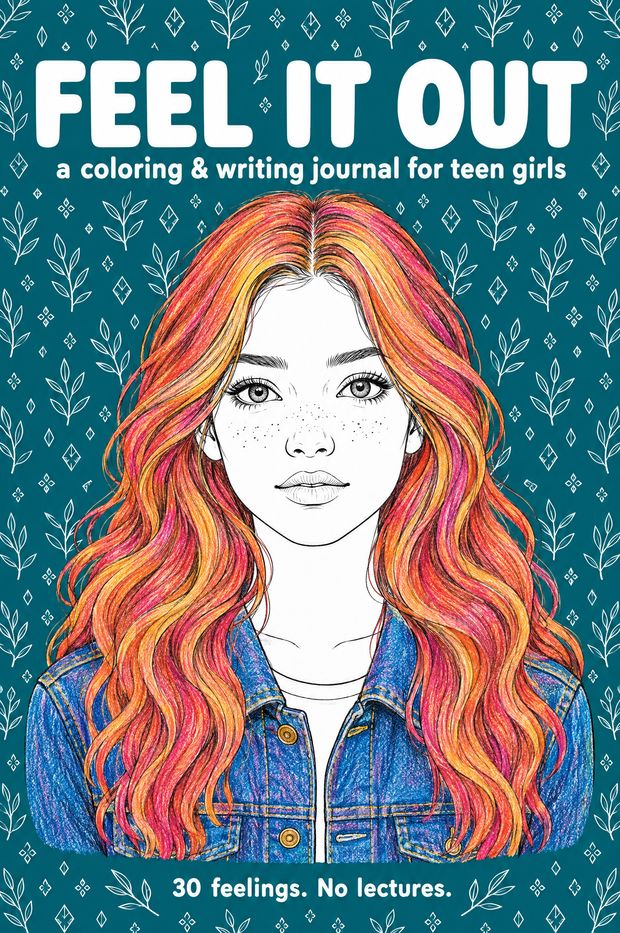
A page to color, and a page that already gives you somewhere to start. Journals for the things that are hard to say out loud, and fantasy for the nights you'd rather be somewhere else.
One format throughout: large pages, heavy line art, and somewhere to write. What changes is who it is for and what it is about.
Thirty feelings, one per spread. A full-page scene to color on the left. A page to say what actually happened on the right. It never hands her a blank page — which is where most journals die.
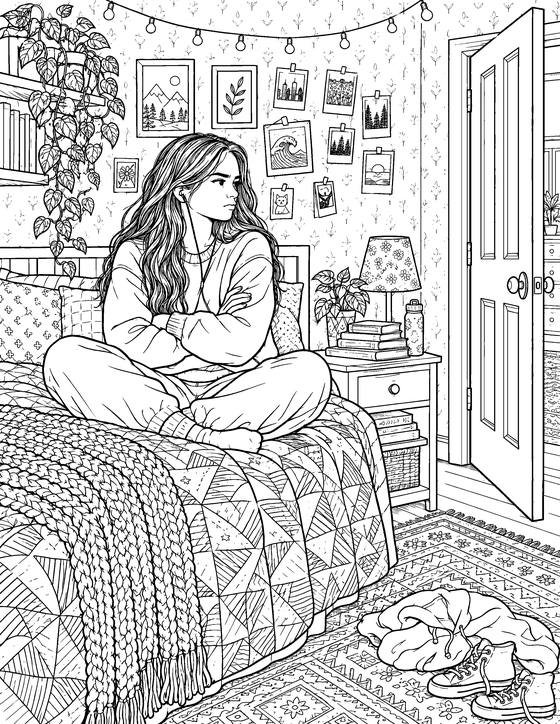
Every page shows the reason for the feeling, not a cartoon face labelled "angry". Detailed enough to be worth half an hour and a decent set of pencils.
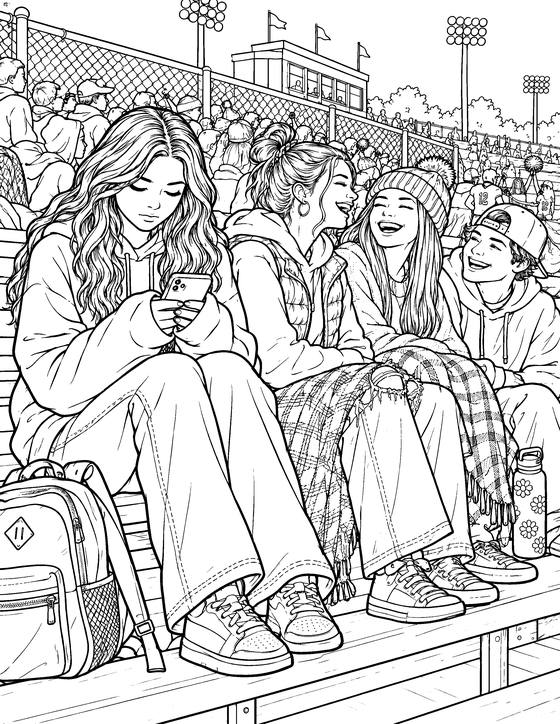
Then three questions she can actually answer — "Who deserved it, and who actually got it?" — and a body check, so she can name where it landed before she has words for it.
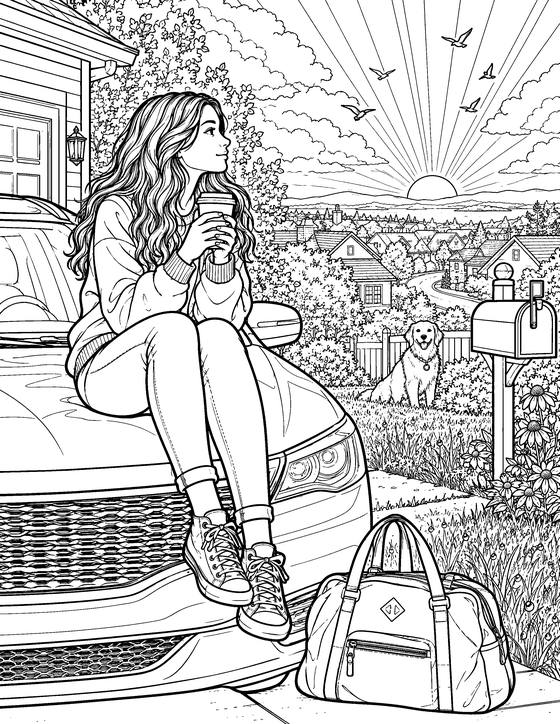
Furious, left out and numb are in here. So are proud, brave, loved, and just fine, actually. It isn't a mood tracker and it isn't a record of bad weeks.
Most people buying this are a mother, an aunt, a teacher or a counsellor, and every one of them is asking the same question. Here's the straight answer.
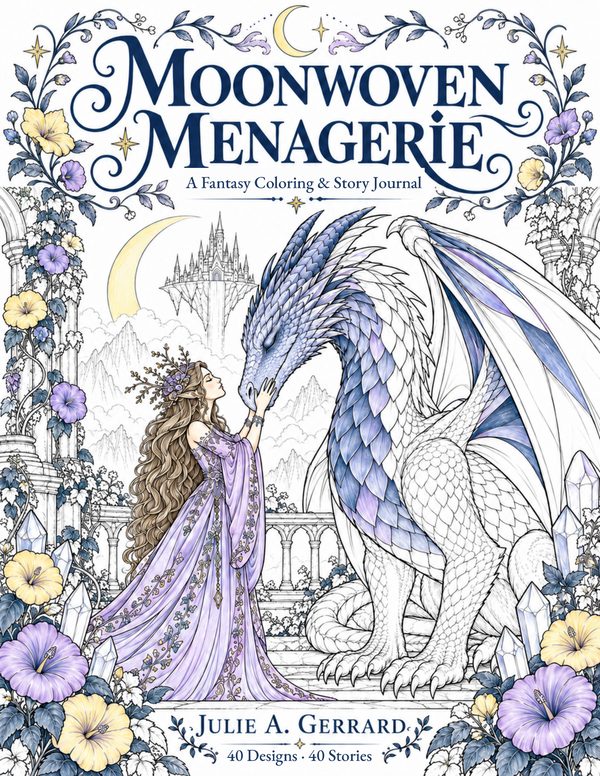
Forty enchanted designs — dragons, griffins, fae and hidden realms — and one enemies-to-lovers story you name yourself.
Same bones as Feel It Out, different world entirely. Color the scene on one side. On the reverse, a few lines of story open the door — an ancient loyalty, an uneasy bargain, a signet you were told to bury — and the rest of the page is yours.
Twelve of those pages belong to one story, marked with a crescent in the corner so you can find them. Nobody in it has a name, because you write the names in at the front. After that he is yours: the one who was sent to kill you and didn't, the voice you'd know behind any mask, the man who names his allegiance in three words and none of them are the ones he was ordered to say. You decide how it ends. You decide whether it ends.
He is called
The one who warns you is called
And when they ask, you are called
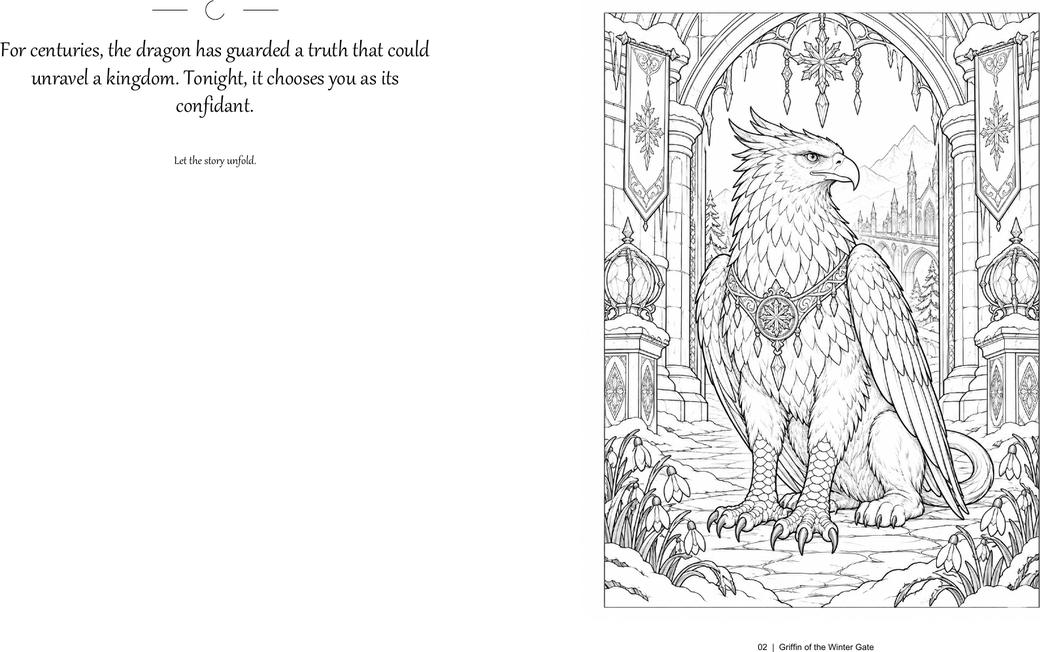
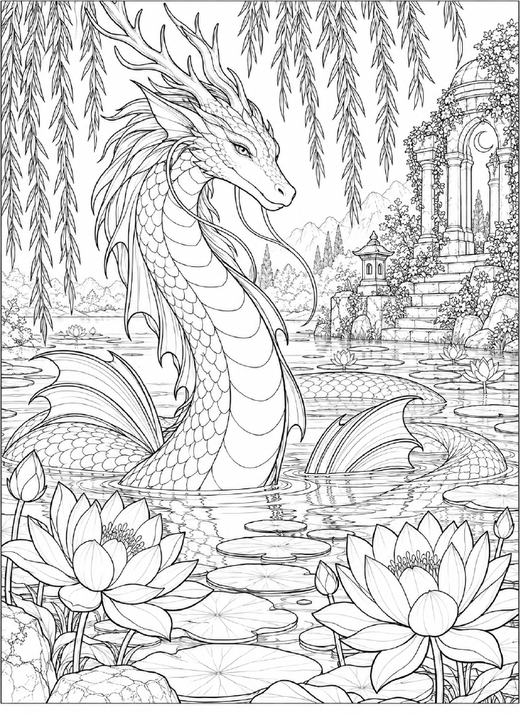
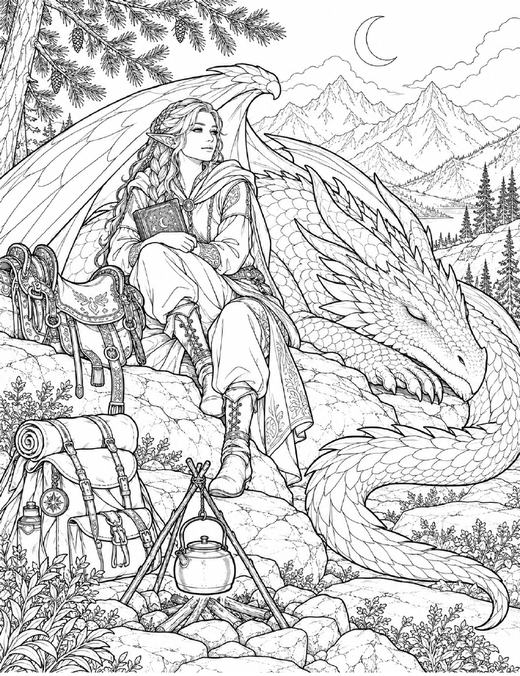
Five worlds, eight designs each
Closed gates, cold banners, and a court that remembers every exile by name.
Tides, lily water, a court beneath the waterline, and the bridges that fell.
Everything that grows at night, and the gates left overgrown behind it.
Star charts, empty sky, and the people who read fate for a living.
Hoards, hatcheries, libraries. The places dragons keep what matters.
The Winter Court got all forty pages to itself, and the story carries straight on from here. Just below.
For the friend who read all five books in one weekend and has nowhere to put it. Large 8.5 × 11 pages, matte cover, detailed enough to be worth an evening and a good set of pencils.
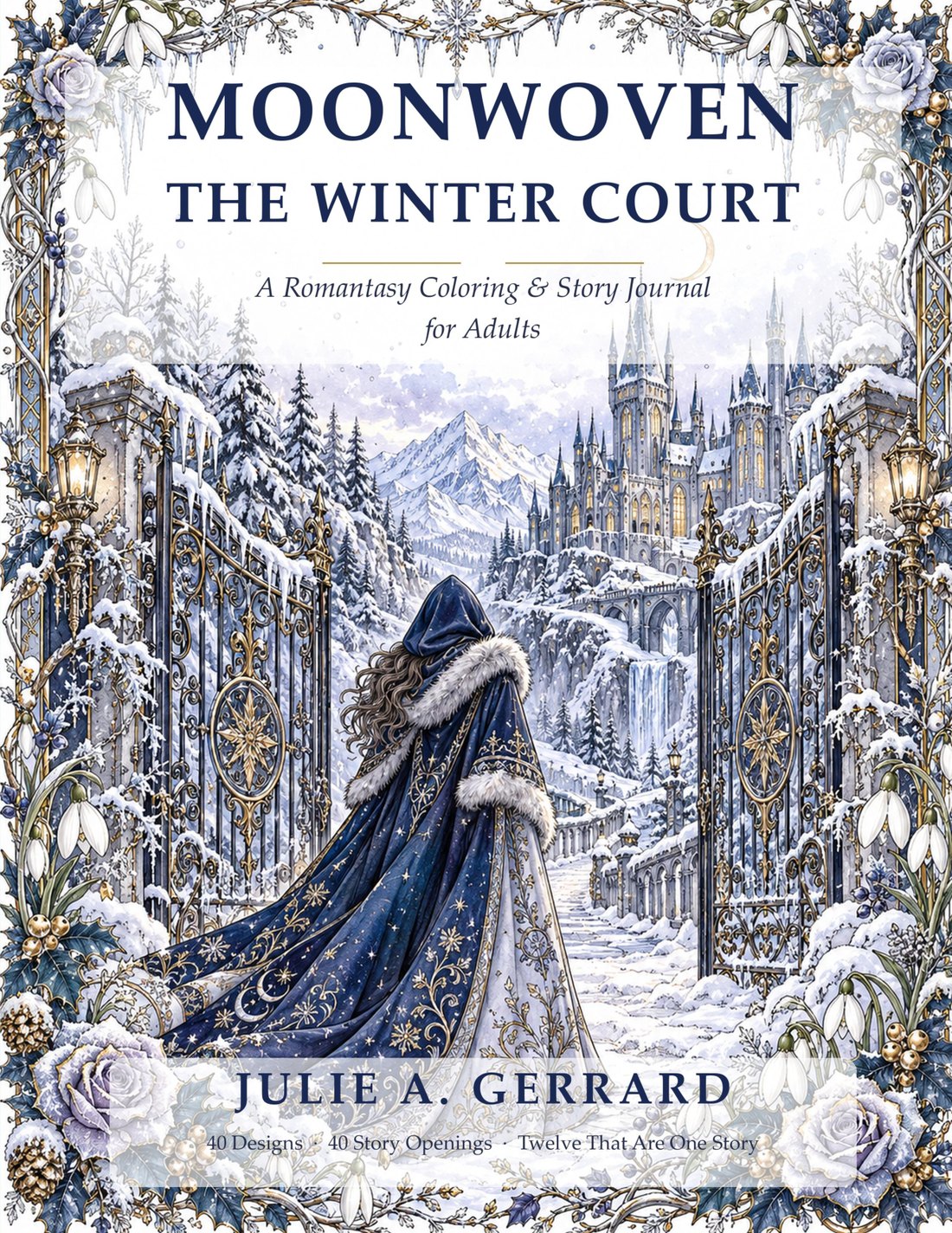
Volume two. One world, all the way down.
The first book moved through five worlds and gave each of them eight pages. This one stays in the Winter Court for all forty, and goes as deep as forty pages allow. The same two people, still unnamed, carried forward from where volume one left them.
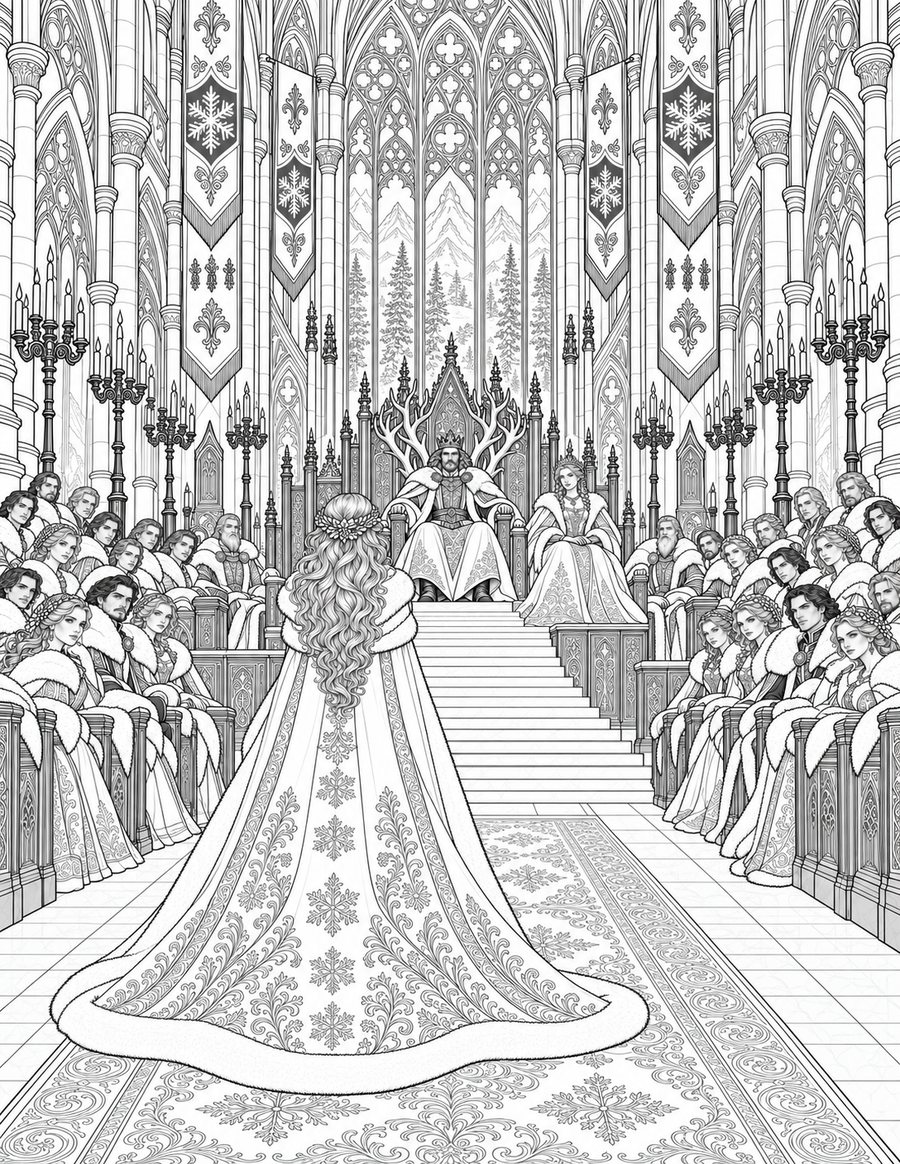
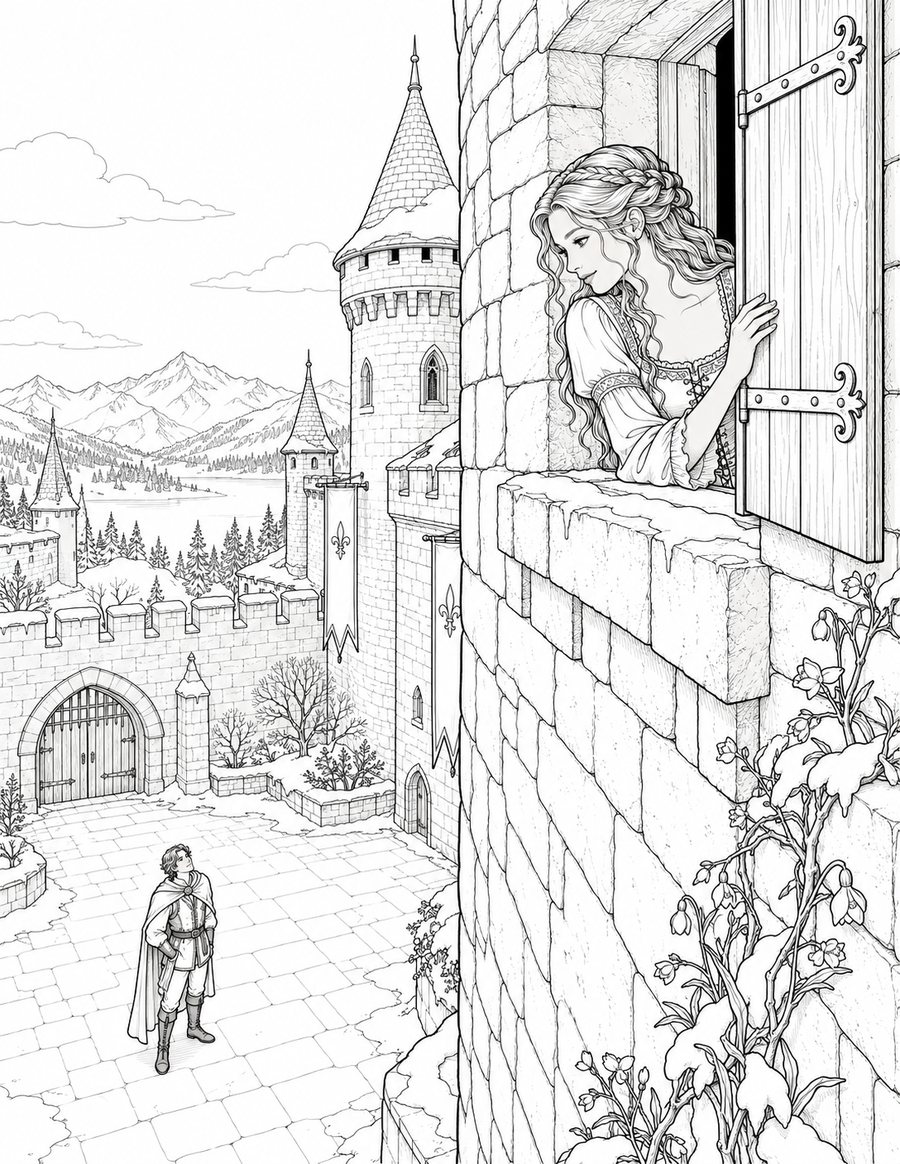
Forty designs and forty story openings. Twelve of them are not separate at all — read in order, they are one story running underneath the book, and you will know the twelfth when you reach it.
Ruled space under every opening for where you take it next. The ending is not written down. That part is yours.
What changes in volume two
Forty pages inside the Winter Court instead of eight. The architecture, the court itself, and what happens in the rooms nobody shows visitors.
Twelve of the forty openings run together as one continuous story. The other twenty-eight stand alone, the way volume one did.
It carries straight on from it. If you don't, it still works cold — Moonwoven Menagerie is up above.
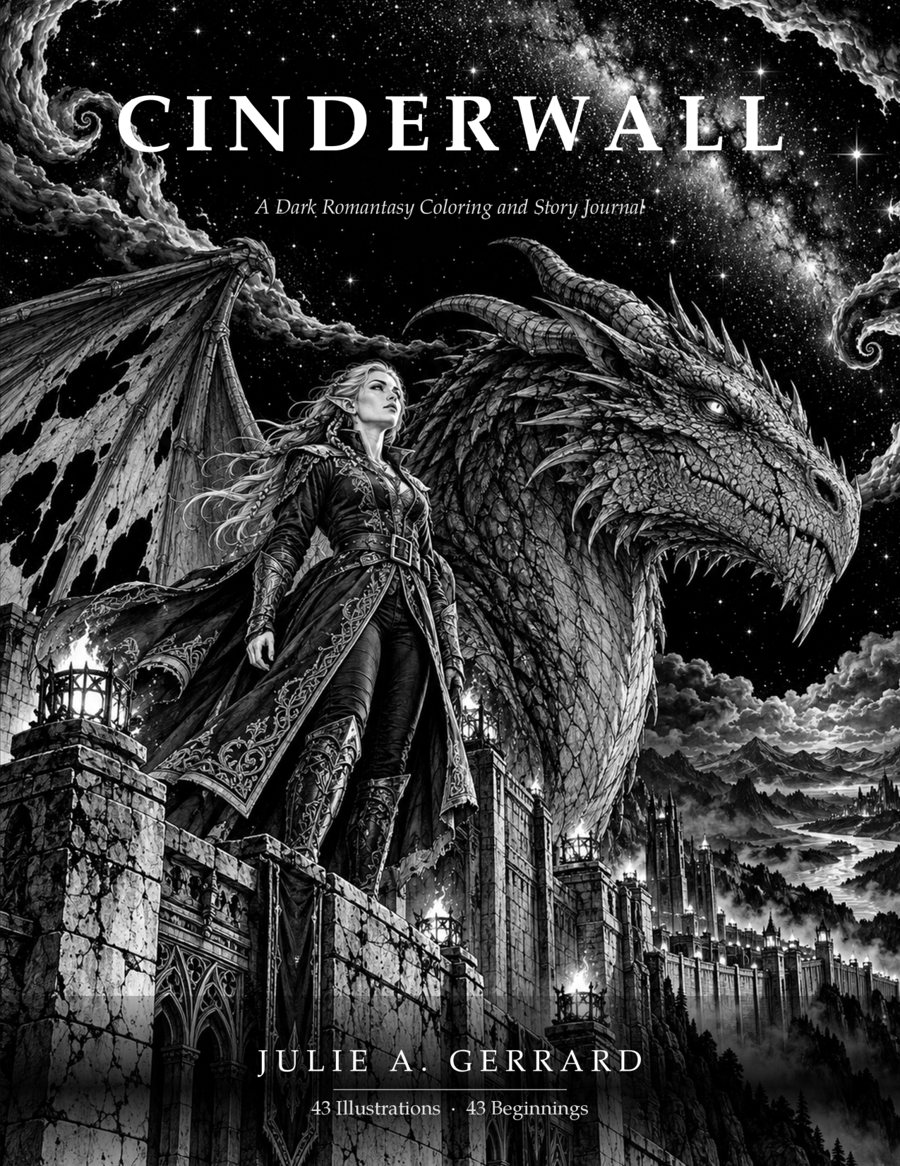
Forty-three illustrations. Forty-three beginnings. You write the rest.
A dark romantasy coloring and story journal. Every spread gives you a drawing on one side and an opening on the other — a few lines that put you somewhere, hand you a problem, and then stop. What happens next is yours.
The openings are not prompts in the workbook sense. Nobody asks how it made you feel. They are first paragraphs, and they are written to be hard to walk away from.
Same build as Moonwoven Menagerie: fine-line work with enough in it for a long evening, printed one side only so pens cannot bleed through onto the writing.
Cinderwall — $16.99What is in it
Each one a beginning with a hook in it, not a question about your feelings. Finish it, ignore it, or argue with it.
Single-sided art, 8.5 × 11, so pens and markers stay where you put them.
Darker, and the writing carries more of the weight. Moonwoven Menagerie is up above.
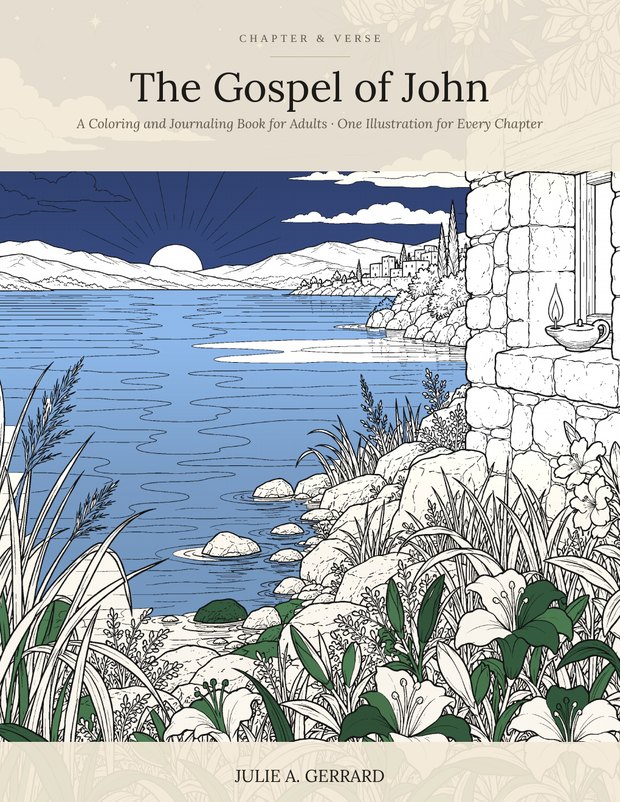
Twenty-one chapters. Twenty-one illustrations. One page at a time.
The whole of John, complete and unabridged, in the King James Version. Not a verse somebody else picked out for you — the entire chapter, set out to be read properly, with an original fine-line illustration facing it and ruled space underneath for whatever it left you with.
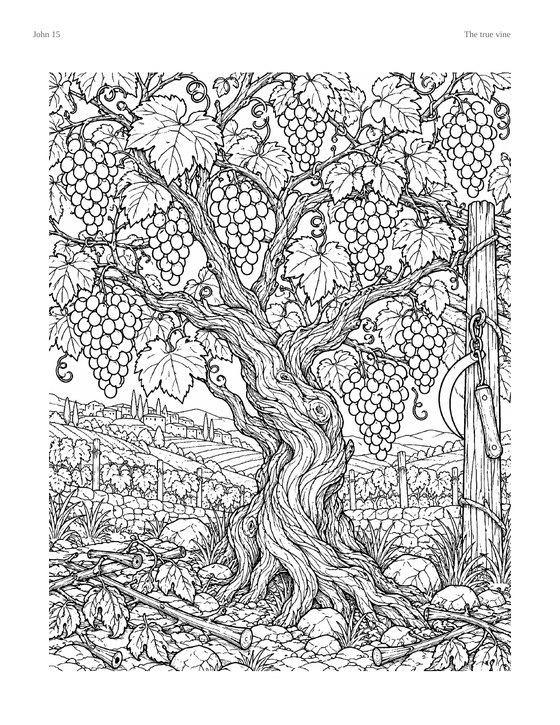
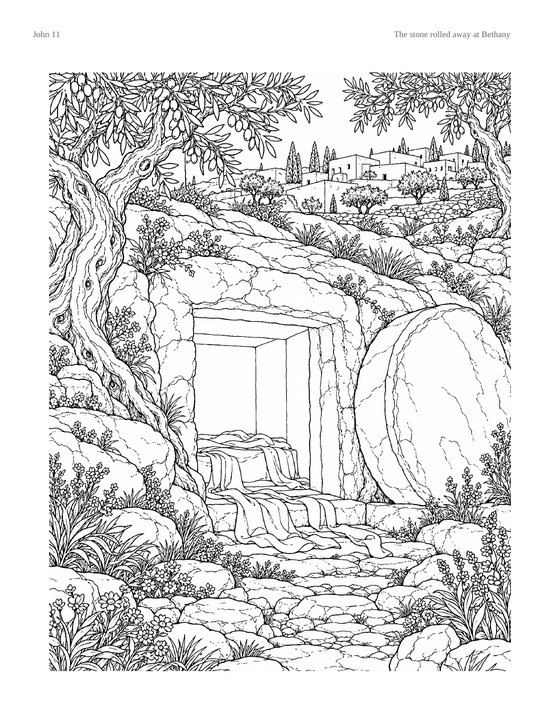
The pictures stay with the place and the moment rather than the face. A vine heavy with fruit. A shepherd's crook left against a wall. A stone rolled back at Bethany and the grave clothes folded. You can spend an hour on any one of them without having decided anything about it first.
Read the chapter. Write what it left you with in the space below it. Then turn the page and spend an hour with the picture. In whichever order suits the day you're having.
The Gospel of John — $13.99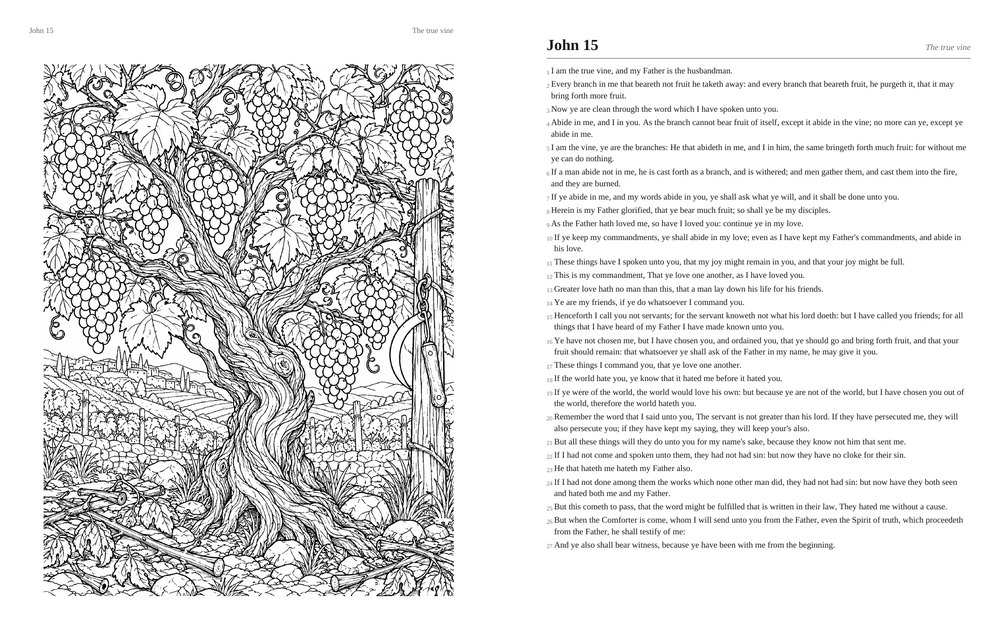
The rest of the series
The same twenty-one chapters for ages 7 to 11, one line from each and a picture a child can actually finish. So a parent and a child can be on the same page, in both senses. Just below.
All sixteen chapters, same format. Out now, further down. The Gospel of Luke is out now too.
One book per book, for as long as it keeps being worth doing.
Scripture is the King James Version, which is in the public domain and belongs to everybody. The illustrations are original to these editions and made with AI assistance, edited by me — which I'd rather tell you on the website than have you work out on page forty.
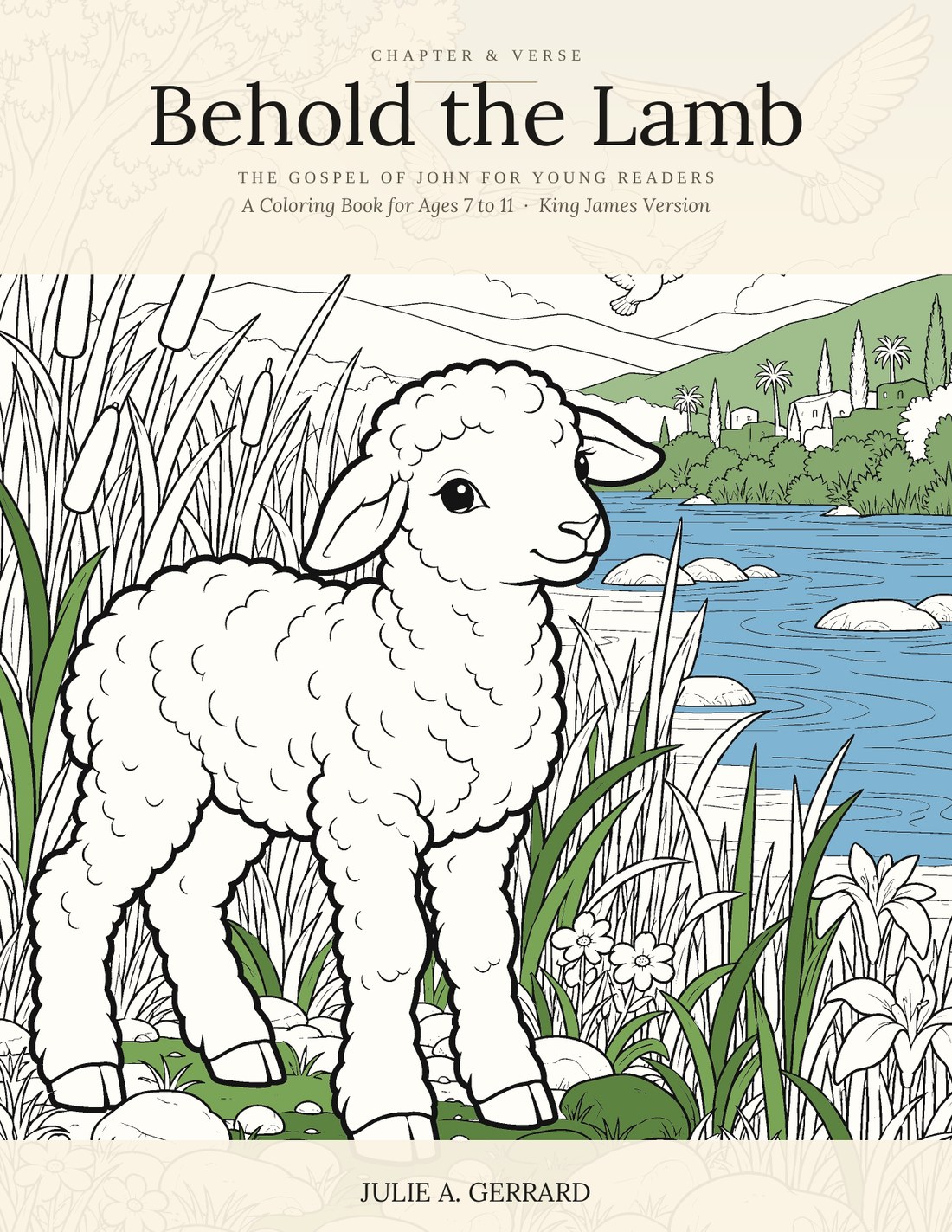
Twenty-one chapters. Twenty-one pictures. One page at a time.
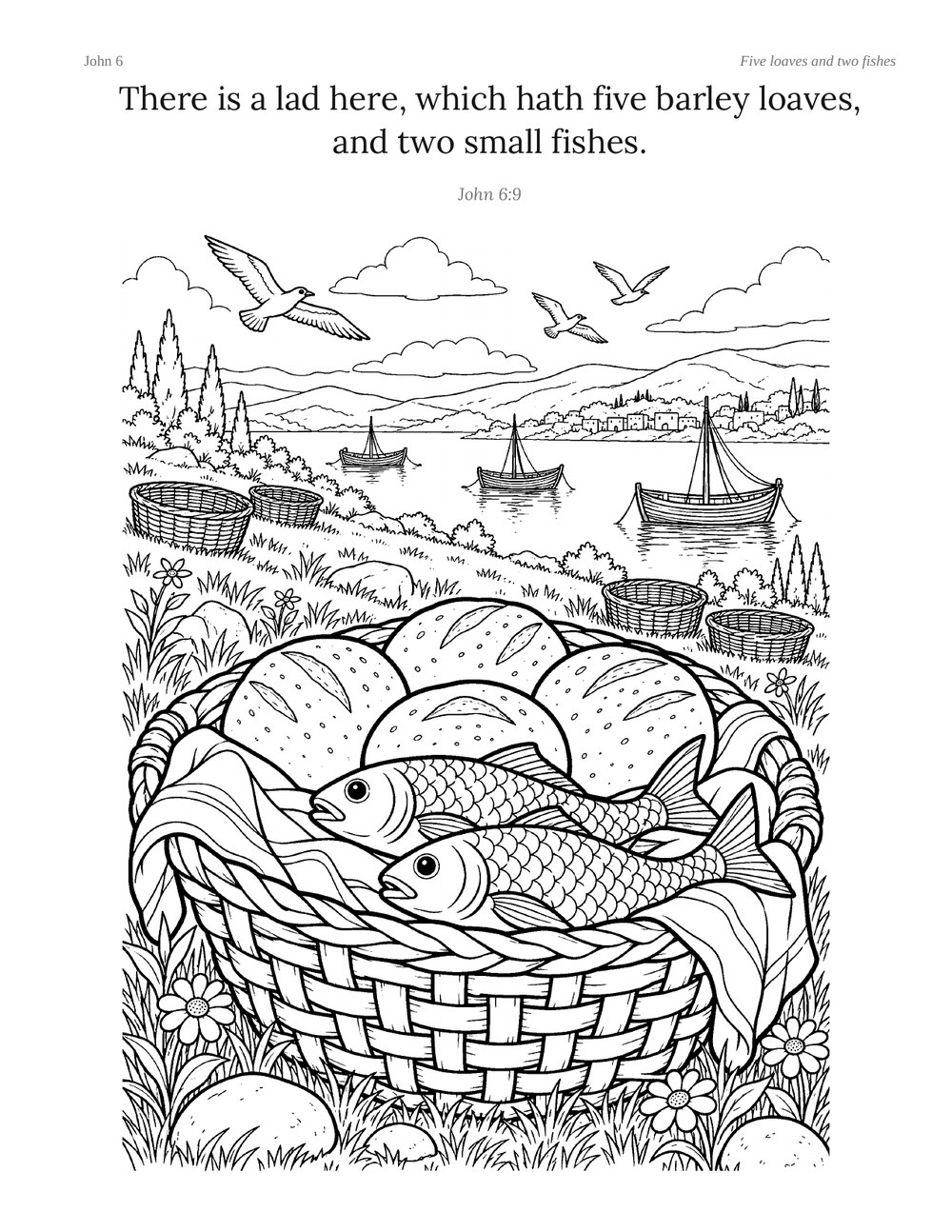
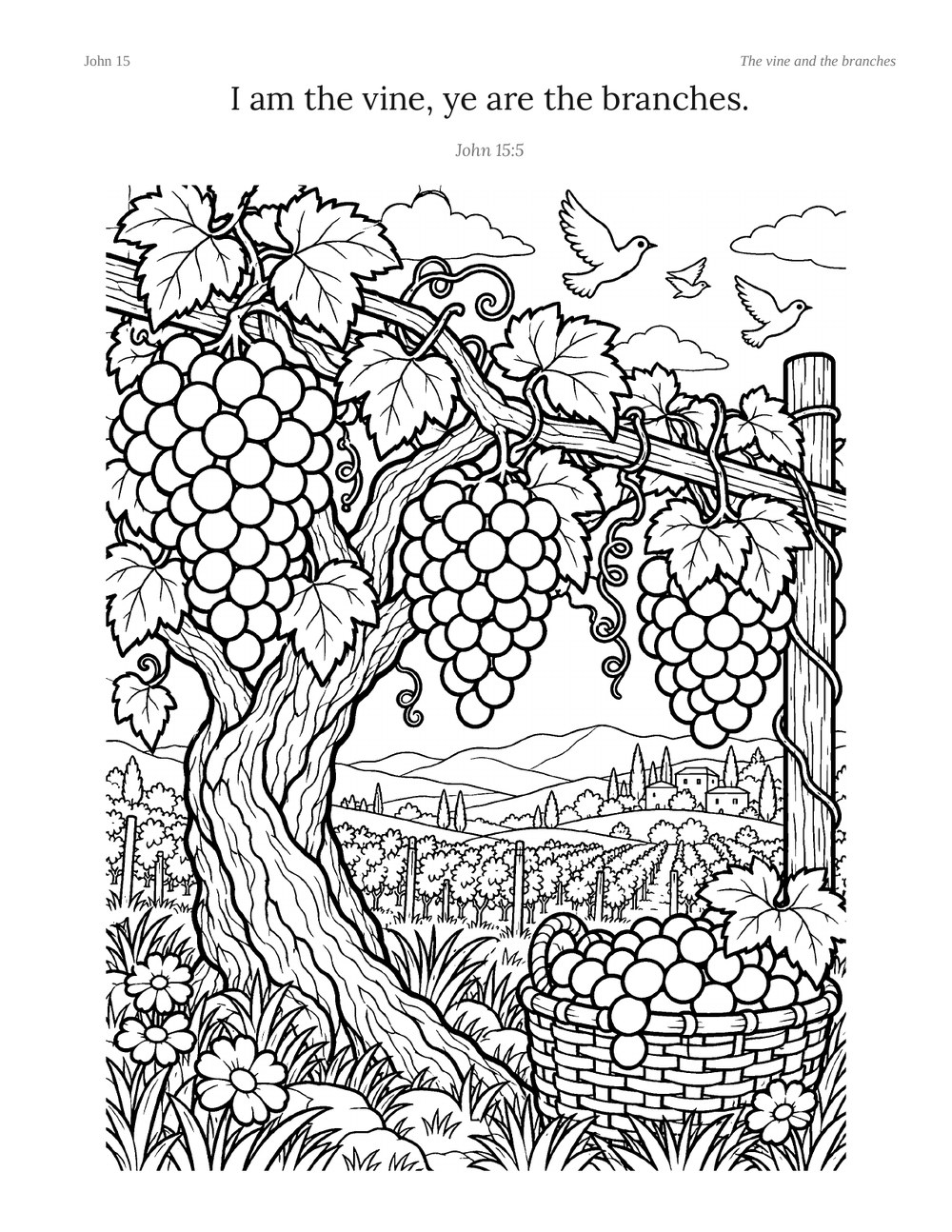
The Gospel of John for children, one chapter to a page. At the top of each page is a line from that chapter, in the words of the King James Bible, not simplified and not reworded. Underneath is a picture to color, drawn from the very same chapter.
A grown-up can be reading the whole chapter in the full-size edition. You will both be on the same page, in both senses.
Every picture is backed by a blank page, because children use markers and markers go through paper. The drawings are detailed enough to be worth a long afternoon without being fiddly for smaller hands.
Behold the Lamb — $9.99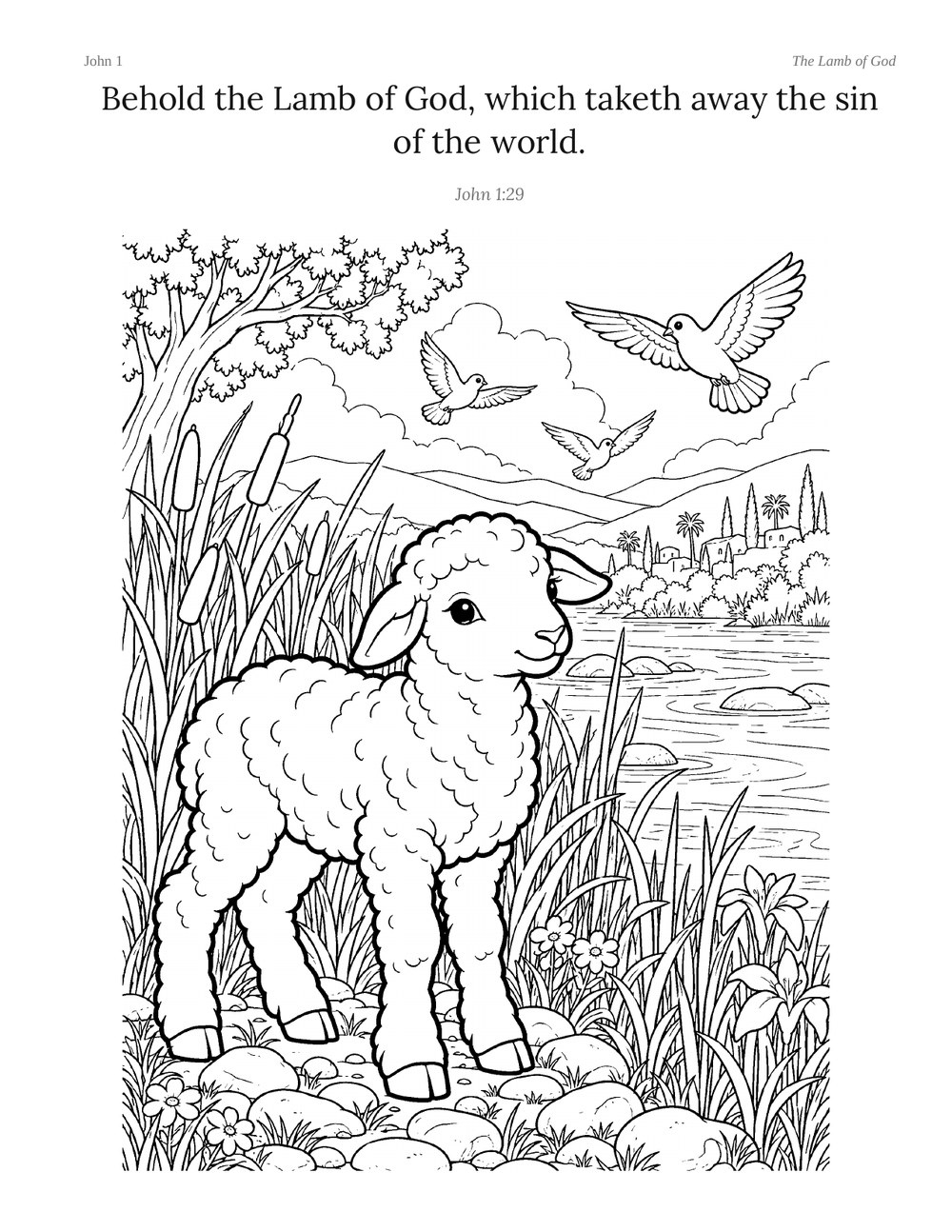
Reading it together
King James, exactly as written. Children get the real sentence, not a paraphrase written down to them.
All twenty-one, in order, matching the full-size edition page for page so the two can be used side by side.
A blank page behind every picture. Big 8.5 × 11 pages, drawn for ages 7 to 11.
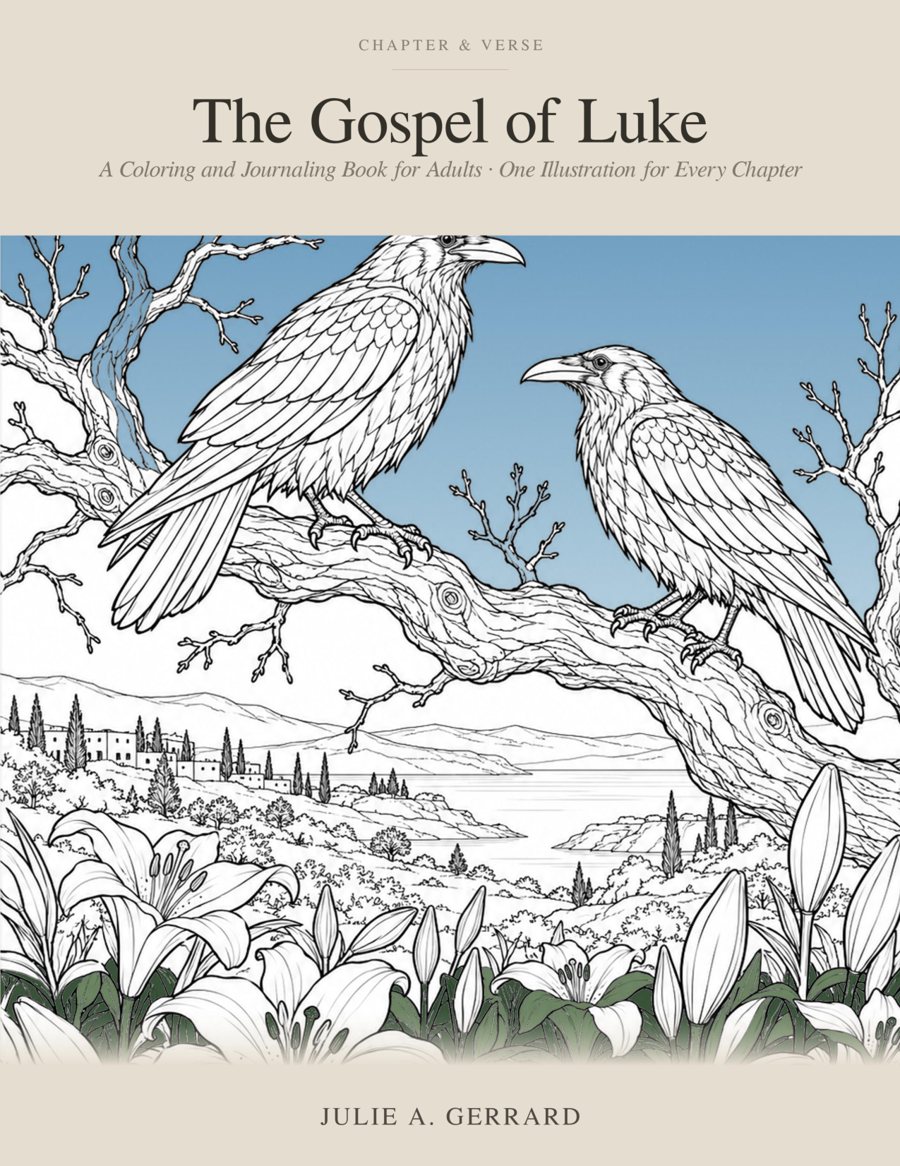
Twenty-four chapters. Twenty-four illustrations. One page at a time.
The whole Gospel of Luke in the King James Version, one chapter to a spread, with an original fine-line illustration facing every one. Nothing skipped and nothing paraphrased.
Luke is the one who went looking for the details nobody else wrote down. The angel at the altar. The shepherds out in the field at night. The son coming up the road while his father is still running.
Ruled space under each chapter for what it left you with. No illustration printed on the back of scripture, so markers cannot bleed onto the words.
The Gospel of Luke — $16.99Alongside it
All twenty-one chapters, the first book in the series. Out now.
All sixteen chapters, same format. Out now.
The same twenty-four chapters for ages 7 to 11, so a parent and a child can be on the same chapter. Just below.
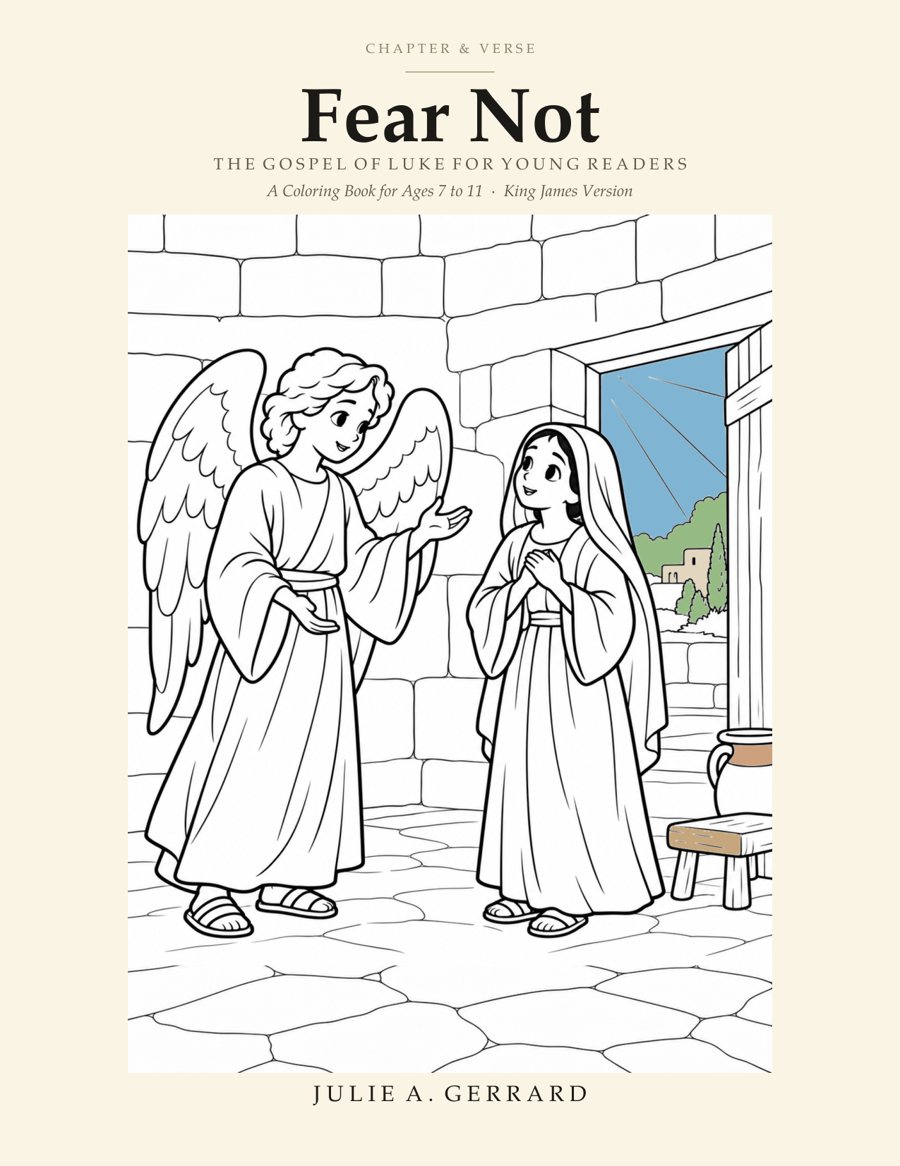
Twenty-four chapters. Twenty-four pictures. One page at a time.
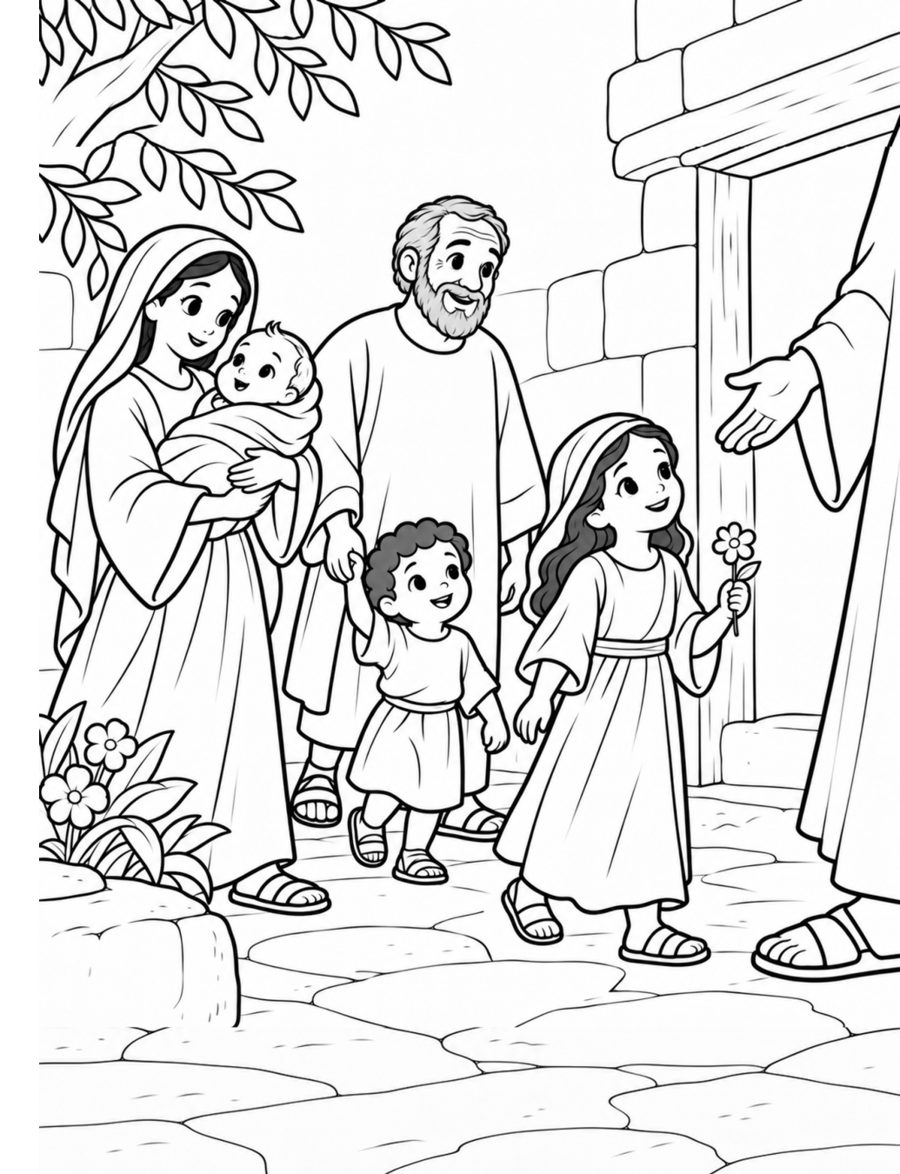
The Gospel of Luke for children. On the left is a line from that chapter, in the words of the King James Bible, not simplified and not reworded. Facing it is a picture to color, drawn from the very same chapter.
Every picture gets a whole page of its own and runs right off the edges of the paper, so there is as much room to color as the book allows. No picture is printed on the back of another, so markers cannot bleed from one onto the next.
A grown-up can be reading the whole chapter in the full-size edition. You will both be on the same page, in both senses.
Fear Not — $9.99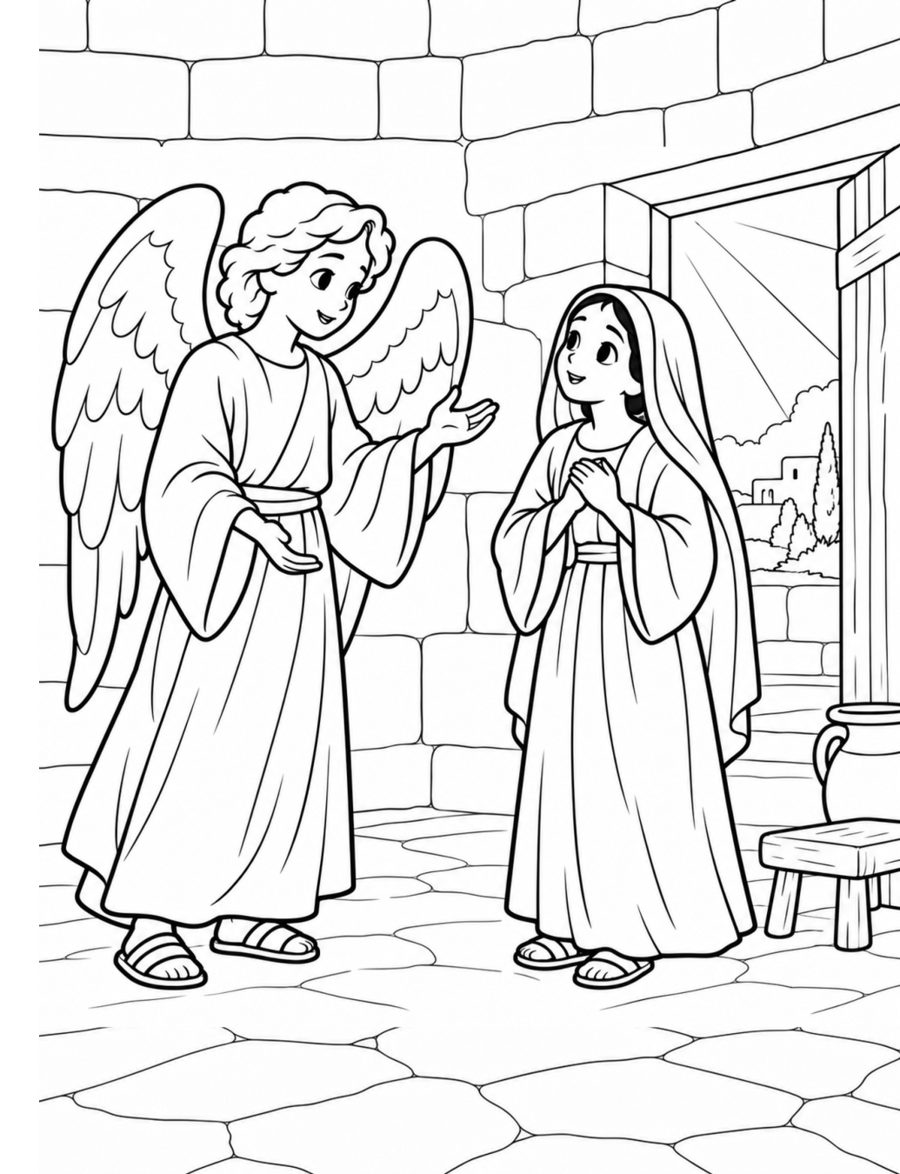
Reading it together
King James, exactly as written. Children get the real sentence, not a paraphrase written down to them.
All twenty-four, in order, matching the full-size edition so the two can be used side by side.
A full page for every picture, edge to edge. Big 8.5 × 11 pages, drawn for ages 7 to 11.
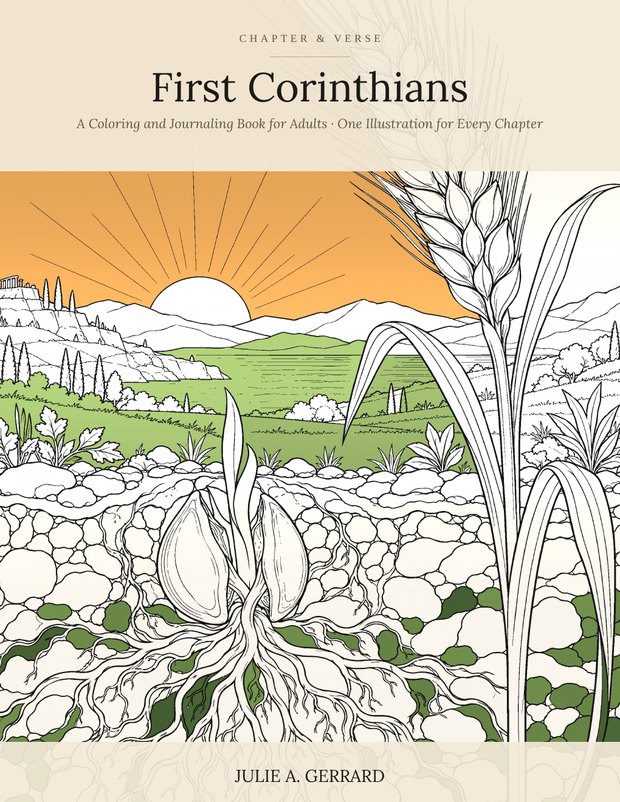
Sixteen chapters. Sixteen illustrations. The letter nobody writes to a church that has it all figured out.
Same format as John, complete and unabridged in the King James Version: the whole chapter set out to be read, an original fine-line illustration facing it, and ruled space underneath for what it left you with.
Paul is writing to a congregation arguing about status, food, lawsuits and who outranks whom, and most of what he says to them has not dated at all. Chapter thirteen is the one read at weddings. In context it lands differently, because it arrives in the middle of an argument about which gifts make a person important, and answers that none of them do.
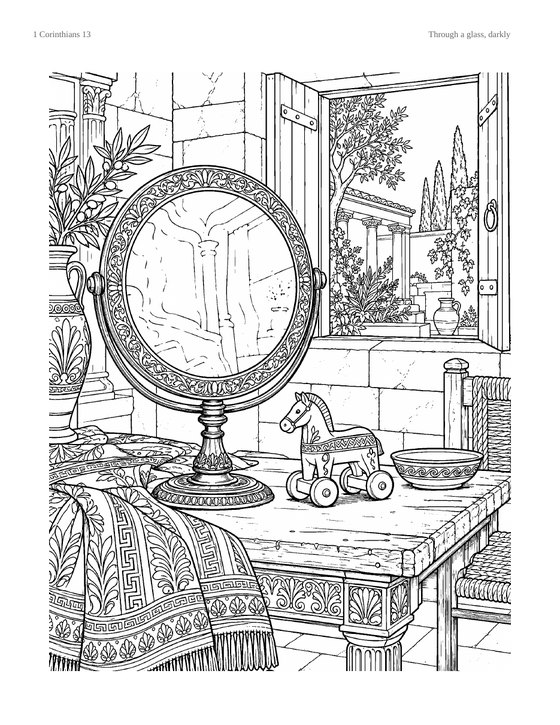
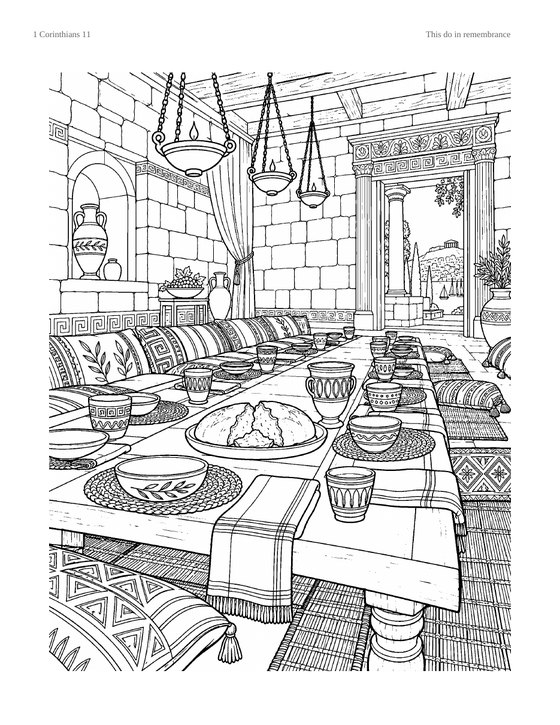
The pictures stay with the city and the household rather than the face. A bronze mirror on a table. A long table laid for a meal. A harp, a trumpet and a pair of cymbals set down after the noise stops.
First Corinthians — $12.99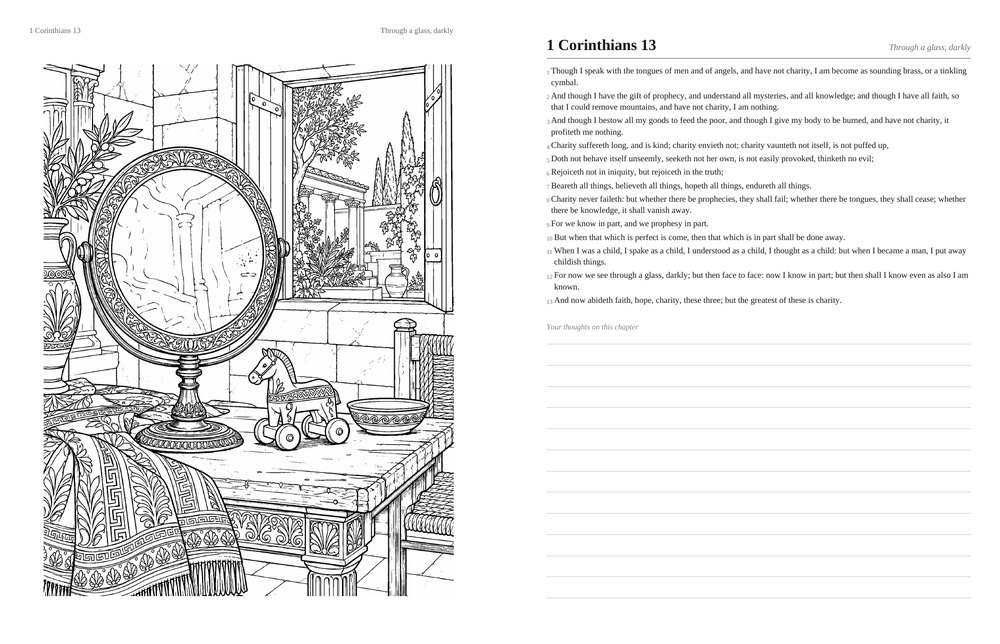
The series so far
All twenty-one chapters, the first book in the series. Up above, or on Amazon.
Behold the Lamb for John and Fear Not for Luke, both for ages 7 to 11, each sitting beside the grown-up book it follows. A first Corinthians for children has not been made yet.
One book per book, for as long as it keeps being worth doing.
Color it in. Then write down what really happened.
Nobody knew where we were. Nobody had a number to call. We drank out of a hose, built a ramp out of scrap plywood and a pile of bricks, taped songs off the radio, and drove to a field somebody found by turning at a cow. We came home when the streetlights came on, which was the entire supervision system, and it worked.
On the right is a scene you lived through. On the left is a question about it and the room to answer: where was the field, and who drove. Who knocked, and did you open it. How much your family owed in late fees. Write it down now that everyone involved is old enough that nobody is getting grounded.
The pages run in order, earliest to latest, so each book reads as a timeline rather than a pile of nostalgia. Two companion books, starting with Gen X, and it does not stop there.
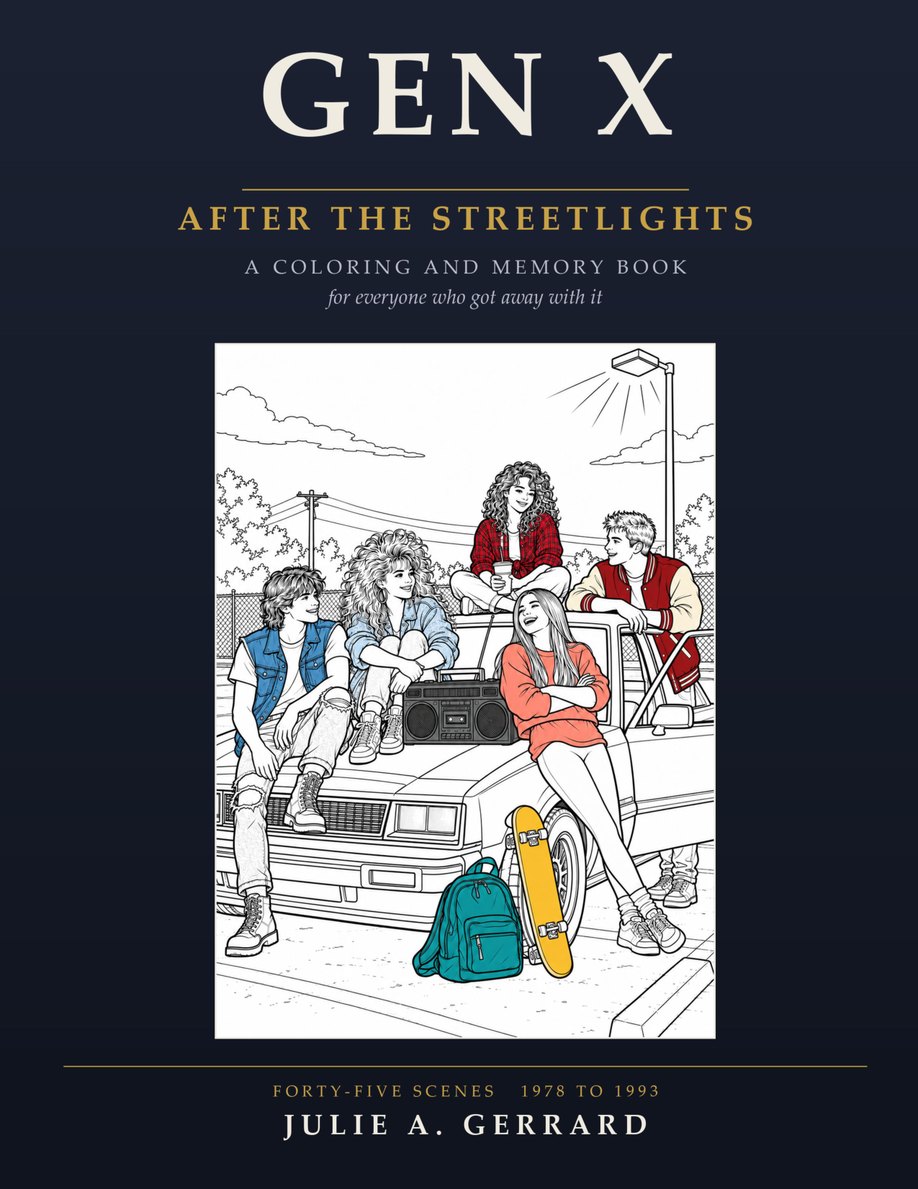
The teenage half. The phone cord down the hall, the mixtape, the mall, the video store on a Friday night, and a party nobody's parents could have found.
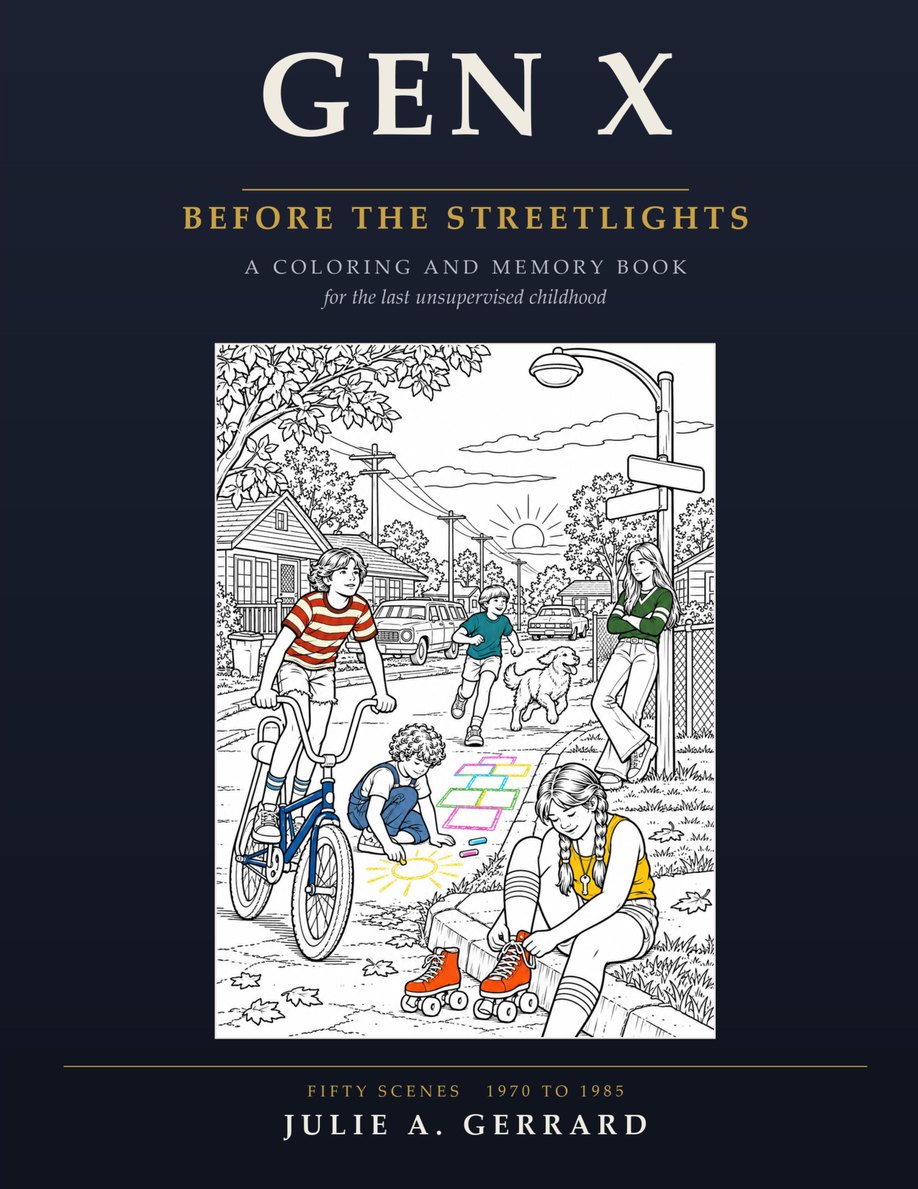
The last unsupervised childhood. The neighborhood, the playground, and the three hours every afternoon when a nine-year-old was running the house.
The format holds for anyone with a few decades behind them. Every generation gets the same treatment: in order, in their own words, with room to write.
One format, many rooms. The same idea holds for anyone stuck in a season they don't have words for yet — which turns out to be most of us, at some point. Feel It Out started with teenage girls. It does not stop there.
For new mothers. The same thirty-feelings format, pointed at the months nobody photographs: the three in the morning ones, the ones you would not say out loud at a baby shower, and the ones that turn out to be ordinary once somebody names them.
Five worlds went into the first book, eight designs each. The second spent all forty inside one of them. The other four are still waiting, and the thread running underneath does not finish where volume two does.
I'd rather build the one someone is actually waiting for. Tell me which, and I'll let you know when it lands. That's the only thing I'll ever email you about.
No list swapping. No daily anything. Unsubscribe by replying once.

"Write about your feelings" is where most journals die. A blank page is a dare.
Who's writing thisI write the books I went looking for and couldn't find. Feel It Out started with a simple problem: journals for teenage girls either hand you a blank page and call it healing, or hand you affirmations nobody believes. Neither survives contact with an actual fifteen-year-old having an actual bad week.
I'm not a therapist. I'm a mother of two daughters, a business owner, and someone who worked out a long time ago that the useful question is almost never the polite one. That's the voice the books are written in — big sister, not clinician.
I live in Colorado with my husband, our two daughters, our dogs, our cats, and a horse with opinions.